






































 POLYWOOD
My Wishlist
Easily build your wishlists, or save them for later to add to the cart. Click here for details.
POLYWOODEasily build your wishlists, or save them for later to add to the cart. Click here for details.
Main Menu - Mobile
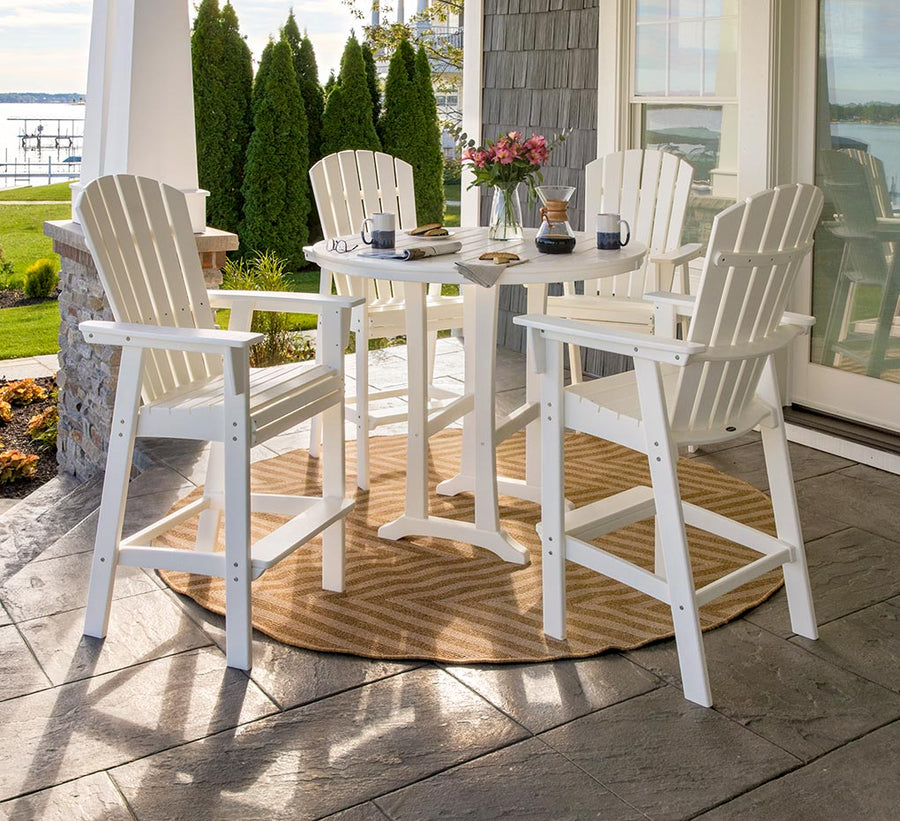
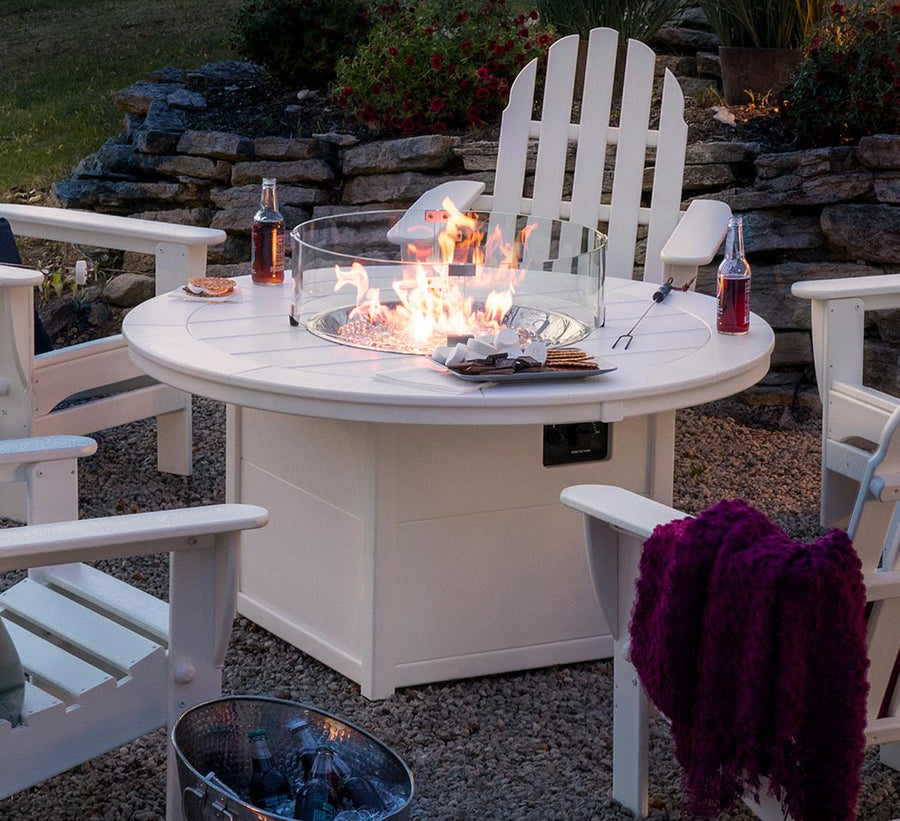
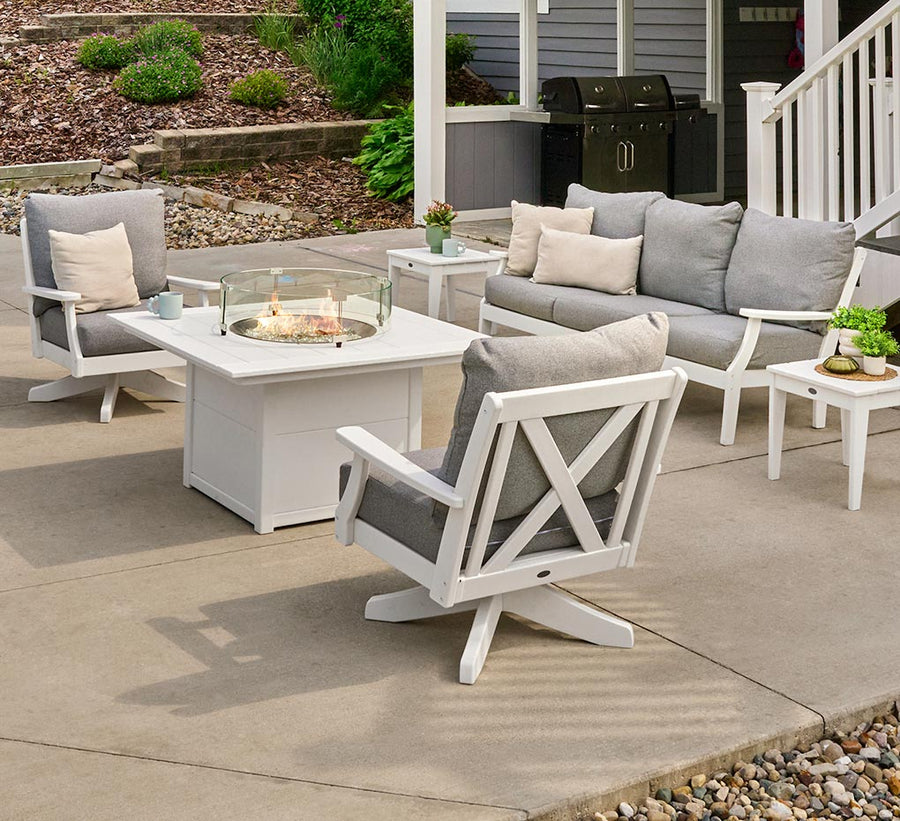
Reacquaint yourself with the cosmos—and introduce your youngsters to the stars—by setting up a comfortable at-home stargazing spot. Use our guide to prep your patio for a magical night of backyard stargazing with the whole family. Read our suggestions for ensuring your stargazing gathering goes off without a hitch.
Stargazing is the simple act of looking at the stars and other celestial objects in the night sky. It's a leisurely activity humans have enjoyed for thousands of years for various reasons, from scientific research to astrological predictions—or just for fun.
In order to see as many stars as possible, you'll want clear skies with little cloud cover. Plan ahead and check the weather so you can avoid an overcast evening.
The key to an excellent stargazing experience is darkness, so coordinate your sessions around the Moon's brightness. Check the Moon's current phase to choose a night when you'll get a clear view of the stars.
Here are some safety and style tips to enhance your skywatching experience:
 |
 |
 |
Light pollution will keep you from seeing the stars, so turn off all your outdoor lights to ensure a good view. For safety, line pathways, stairs, and doors with LED strips that can be turned on and off via remote or a smartphone app.
Here's a list of suggested things to keep on hand that will make your night viewing extra enjoyable:
Here's a list of things you can see while observing the night sky.
The closest object to us, the Moon quietly orbits Earth from a safe distance—roughly 240,000 miles away. It's a little more than a quarter the size of our planet, and its gravitational pull is the main cause of the ocean's low and high tides.
A star is a huge glowing ball of gasses held together by gravity. The nearest star (other than the Sun) is Proxima Centauri, hovering 4.25 light years away. The color of a star indicates its temperature and relative age. Blue stars are young and burn the hottest, and red stars have cooled off considerably in their old age.
A group of stars that appears to form a recognizable shape is called a constellation. Ursa Major looks like a bear, Scorpius resembles a scorpion, Orion depicts a hunter, and so on.
Our solar system has eight planets: Mercury, Venus, Earth, Mars, Jupiter, Saturn, Uranus, and Neptune. Most can be seen with the naked eye at certain times of the year; others require binoculars or a telescope.
When Earth passes through a comet's tail, bits of debris (aka meteors) enter our atmosphere at high speeds. They quickly burn up, creating streaks of light across the sky. About 30 meteor showers occur annually, and you can find out when and where to look with a quick online search.
A galaxy is a massive collection of stars and other objects held together by gravity. On a clear night, we can see the neighboring Andromeda Galaxy and the Large and Small Magellanic Clouds with the naked eye.
Also called night-shining clouds, these rare phenomena appear in the summer months after sunset. When conditions are just right, we're treated to electric blue clouds that streak the twilit sky.
This is a large space station where astronauts and cosmonauts live year-round. Their jobs are to learn how humans can live and work in space so we can find ways to explore the cosmos further. The station orbits the Earth every 90 minutes, and with NASA's live tracker, you'll know when you can catch it zooming overhead.
The best time to stargaze is when true darkness arrives—between one and two hours after sunset. By this time, the sun has set low enough below the horizon that twilight won't impact your view.
Astronomers will tell you that the long nights during the fall, winter, and spring months are the best for stargazing. Observation season starts in autumn when Daylight Saving Time ends, and we get that extra hour of darkness.
Pair skywatching with these activities to double the fun:
Are you missing items in your cart? Sign In


